
Is Forex Trading Halal or Haram? Islamic Accounts Explained
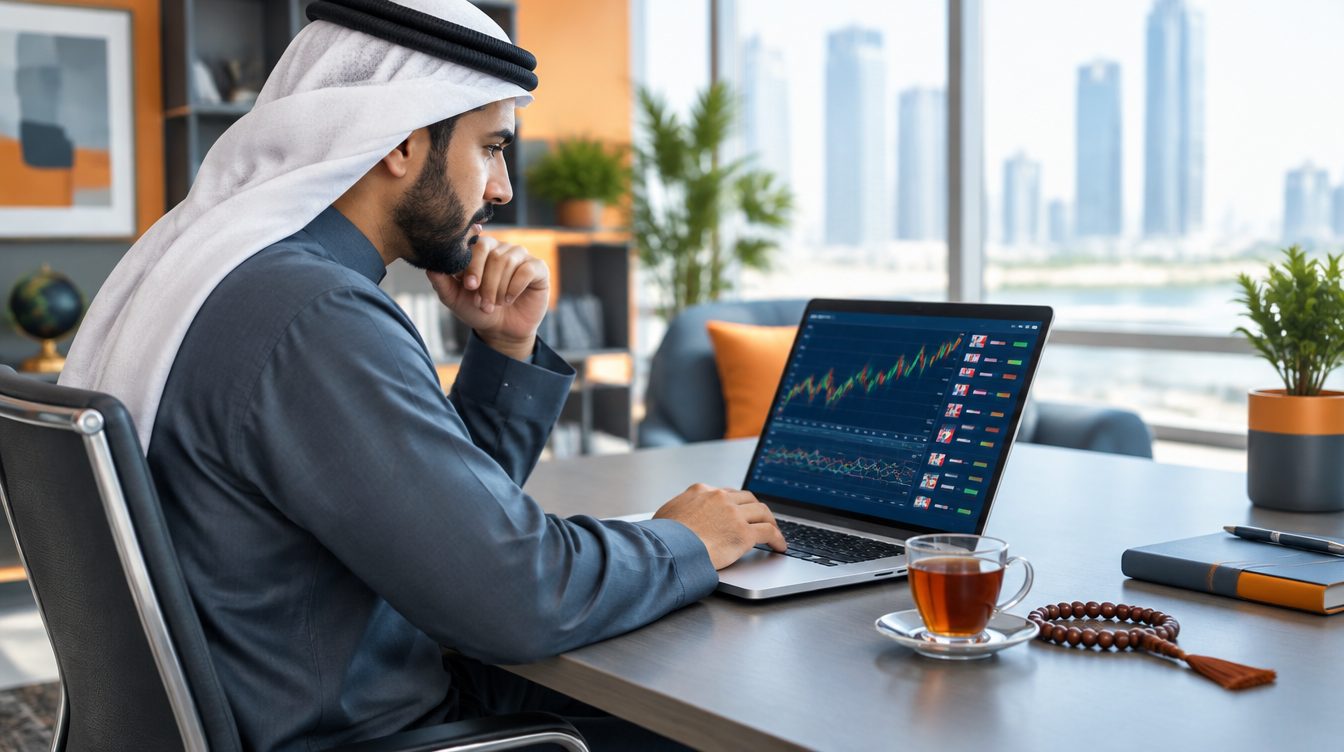
Forex trading can be halal when currencies are exchanged on the spot, hand to hand, with no interest charged or paid, no excessive uncertainty and no gambling-style speculation. Most scholars say ordinary retail forex accounts fail these tests because of overnight swap interest and leverage funded by the broker. A genuine swap-free (Islamic) account removes the interest, but scholars still disagree on whether margin trading and delayed settlement are acceptable.
Key takeaways
- Currency exchange (sarf) is permitted in Islam, but it must be settled on the spot.
- Swap interest (riba) makes standard forex accounts haram in the view of most scholars.
- Islamic accounts remove swaps; some scholars accept them, others still object to leverage.
- Legality is a separate question, and it depends on your country's regulator.
The Islamic rules that apply to currency trading
Classical jurists allowed exchanging one currency for another, on condition that the exchange is immediate (yadan bi-yadin) and that nothing is borrowed at interest. The main concerns for modern forex are:
- Riba (interest): paid or received when positions roll overnight.
- Gharar (excessive uncertainty): contracts where the subject or outcome is unclear.
- Maysir (gambling): trading with no real economic purpose, purely on chance.
- Delayed settlement: spot forex usually settles in two business days (T+2), which some scholars treat as constructive possession and others do not.
How common account types compare
| Account or product | Main issue | Common scholarly view |
|---|---|---|
| Standard leveraged account | Overnight swap interest | Haram |
| Swap-free (Islamic) account | Leverage, settlement timing | Disputed: some allow it, some don't |
| Currency futures and options | Deferred delivery, no ownership | Mostly considered haram |
| Exchanging cash for travel or business | None if done on the spot | Halal |
Watch for brokers that remove the swap but add a fixed "admin fee" that grows the longer a trade stays open. Many scholars treat that as interest under another name.
Is forex trading legal in Saudi Arabia and Pakistan?
Halal and legal are different questions. In Saudi Arabia, residents commonly trade through overseas brokers regulated by bodies such as the FCA or ASIC. Reporting suggests the Capital Market Authority does not currently license local retail forex or CFD brokers. In Pakistan, the SECP warned the public in April 2025 against unauthorised offshore trading platforms offering forex and similar products. The State Bank has previously restricted payments to such apps. Check your regulator's current position before opening an account.
A practical checklist
- Use a regulated broker that offers a genuine swap-free account, with no hidden time-based fees.
- Keep leverage low, or avoid it if your scholar considers margin impermissible.
- Close positions quickly rather than holding for weeks.
- Avoid trading purely on tips or gut feeling, which edges towards gambling.
- Ask a qualified scholar to review your exact account terms.
Limitations
This is a summary of common positions, not a fatwa. Schools of thought differ, and so do brokers' account terms.
FAQ
Is forex trading haram?
Standard leveraged forex with overnight swaps is considered haram by most scholars. Spot exchange without interest is permitted.
Are Islamic forex accounts really halal?
They remove interest, which solves the biggest problem. Some scholars still object to leverage and delayed settlement.
Is day trading forex halal?
Closing trades the same day avoids swaps, but the leverage and speculation questions still apply.
General information only, not financial, tax or legal advice. Trading leveraged products carries a high risk of losing money.